


Top 10 Misconceptions about Naturopathic Medicine and Naturopathic Doctors

Updated: Aug 4
Understanding the Difference Between ND's, Naturopaths, MDs, and DOs
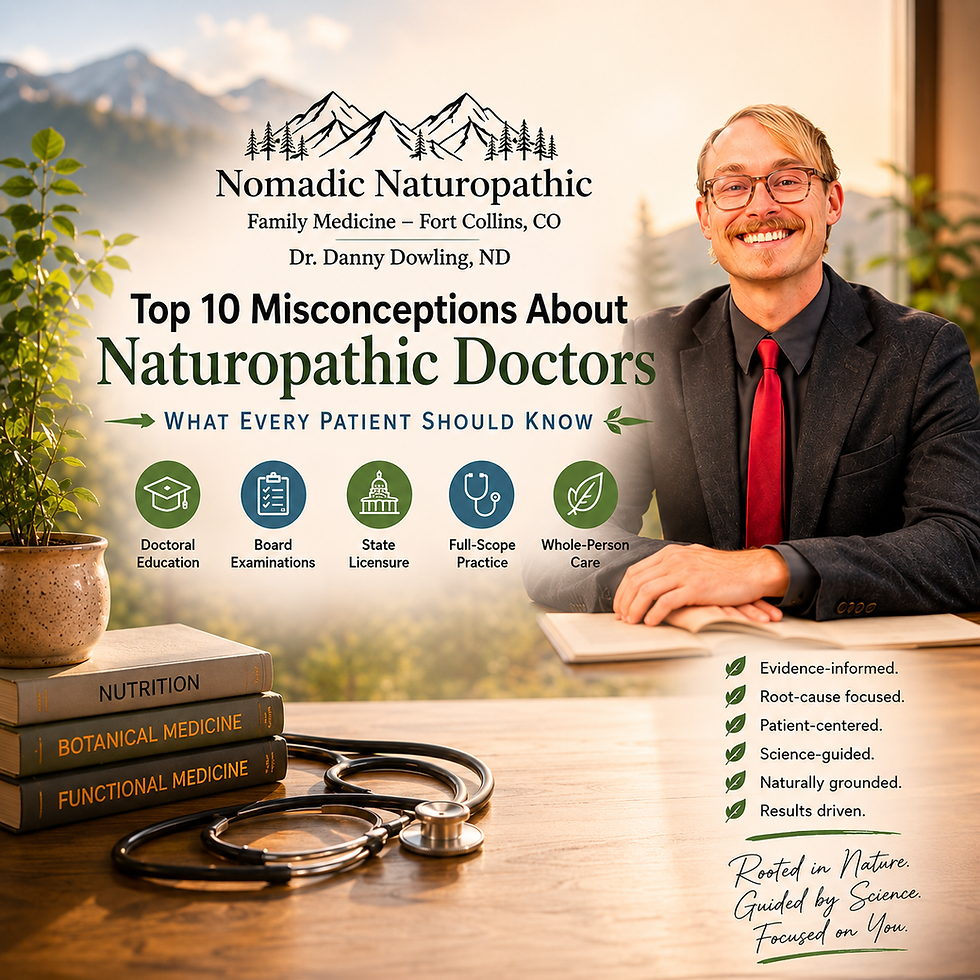
One of the most common sources of confusion in healthcare(both amongst the public and within medicine) is the difference between a Naturopathic Doctor (ND), a naturopath, a Medical Doctor (MD), and a Doctor of Osteopathic Medicine (DO).
Patients often assume these professions have similar training, identical scopes of practice, or completely opposing philosophies. In reality, each profession has distinct educational pathways, licensure requirements, and clinical approaches.
Let's explore the ten most common misconceptions about naturopathic medicine and what patients should know before making decisions about their healthcare.
Misconception #1: Naturopathic Doctors and Naturopaths Are the Same Thing
This is perhaps the most widespread misunderstanding.
A licensed Naturopathic Doctor (ND) graduates from a four-year accredited naturopathic medical school after completing undergraduate prerequisite coursework similar to that required for conventional medical schools.
Accredited naturopathic medical programs include extensive didactic and clinical training in:
Anatomy and physiology
Biochemistry
Pathology
Microbiology
Immunology
Pharmacology
Physical examination
Laboratory diagnosis
Clinical medicine
Nutrition
Botanical medicine
Lifestyle medicine
Counseling
Physical medicine
Following graduation, NDs must pass the Naturopathic Physicians Licensing Examinations (NPLEX), the profession's national board examinations, before becoming eligible for licensure in regulated jurisdictions.
By contrast, the title "naturopath" is often unregulated and may not require formal medical education, accredited training, board examinations, or licensure.
The distinction matters because patients deserve to know the educational background and qualifications of the healthcare professional they are seeing.

Misconception #2: Naturopathic Doctors Are Not Real Doctors
Licensed NDs are doctoral-level healthcare professionals who complete approximately four years of graduate medical education and extensive supervised clinical training.
Like MDs and DOs, naturopathic doctors study:
Anatomy
Physiology
Pathophysiology
Clinical diagnosis
Laboratory medicine
Pharmacology
Clinical sciences
The primary difference lies in treatment philosophy and therapeutic emphasis rather than a complete absence of biomedical training.
Naturopathic medical education combines conventional diagnostic training with nutrition, botanical medicine, lifestyle medicine, and other evidence-informed natural therapies.

Misconception #3: NDs Don't Take Board Examinations
Graduates of accredited naturopathic medical schools must pass the NPLEX (Naturopathic Physicians Licensing Examination) before obtaining licensure in regulated jurisdictions.
The NPLEX evaluates competency in:
Biomedical sciences
Clinical sciences
Diagnosis
Physical examination
Laboratory interpretation
Patient management
Much like USMLE examinations for MDs and COMLEX examinations for DOs, board examinations are designed to establish minimum standards of professional competency.

Misconception #4: Naturopathic Doctors Aren't Licensed
Licensure varies by state, province, and jurisdiction.
In regulated jurisdictions, naturopathic doctors must maintain an active professional license issued by a governmental licensing board.
Licensure requirements generally include:
Graduation from an accredited naturopathic medical school
Successful completion of NPLEX board examinations
Background verification
Continuing education requirements
Compliance with professional practice standards
As with MDs and DOs, practicing without meeting licensure requirements may be prohibited by law.
Misconception #5: NDs Only Recommend Supplements
Supplements are only one component of naturopathic medicine.
Licensed naturopathic physicians are trained in multiple therapeutic modalities, including:
Clinical nutrition
Lifestyle medicine
Exercise prescription
Behavioral medicine
Sleep optimization
Botanical medicine
Physical medicine
Nutraceuticals
Stress management
Preventive medicine
Many patient visits focus primarily on lifestyle modification rather than supplementation.
Misconception #6: NDs Cannot Diagnose Disease
Diagnosis is a fundamental component of naturopathic medical training.
In states with full scope licensure, naturopathic physicians may:
Obtain medical histories
Perform physical examinations
Order and interpret laboratory testing
Order and interpret diagnostic imaging where permitted
Develop differential diagnoses
Identify red flags and medical emergencies
Coordinate referrals to specialists
A key responsibility of any healthcare provider is knowing when referral or co-management is appropriate.
Misconception #7: NDs Are Anti-Medication
Naturopathic medicine emphasizes using the least invasive and lowest-risk intervention likely to achieve the desired therapeutic outcome.
That does not mean licensed NDs are categorically opposed to pharmaceuticals.
In several full-scope states, naturopathic physicians may obtain prescribing authority and utilize prescription medications when clinically appropriate and within their legal scope of practice.
The goal is not to choose between natural medicine and conventional medicine—it is to determine which intervention is most appropriate for the patient.
Misconception #8: Natural Means Safe
Natural therapies can be powerful and effective, but they are not automatically risk-free.
Examples include:
Herb-drug interactions
Liver toxicity from certain botanicals
Blood pressure effects
Blood-thinning effects
Hormonal activity
Proper training allows healthcare providers to evaluate safety, contraindications, dosing, and interactions.
Misconception #9: MDs, DOs, and NDs Are Opposed to One Another
The reality is that many patients benefit from collaborative care.
MDs, DOs, and NDs bring different strengths to patient care.
MDs
Typically emphasize:
Acute care
Hospital medicine
Emergency medicine
Surgery
Pharmacologic management
DOs
Receive the same medical training as MDs while also learning osteopathic manipulative medicine.
NDs
Typically place greater emphasis on:
Prevention
Lifestyle medicine
Nutrition
Chronic disease management
Patient education
Root-cause assessment
When collaboration occurs, patients often receive the benefits of both conventional and naturopathic approaches.

Misconception #10: Naturopathic Medicine Is Not Regulated
In licensed jurisdictions, naturopathic physicians are regulated healthcare professionals.
They must:
Maintain active licensure
Complete continuing education requirements
Adhere to professional standards
Follow state regulations
Remain accountable to licensing boards
Like other healthcare professions, failure to meet professional standards may result in disciplinary action.
What Can a Naturopathic Doctor Do in a Full-Scope State?

While scope varies by jurisdiction, naturopathic physicians practicing in full-scope states may be authorized to:
Diagnose and treat disease
Perform physical examinations
Order and interpret laboratory testing
Order diagnostic imaging
Prescribe certain medications
Administer injections
Perform minor office procedures
Provide preventive care
Manage chronic disease
Deliver nutritional and lifestyle counseling
Utilize botanical medicine
Coordinate care with specialists and primary care providers
Patients are often surprised to learn that naturopathic physicians can function as primary care providers in several jurisdictions.
The Bottom Line
The term "naturopathic doctor" refers to a specific profession with accredited doctoral-level education, national board examinations, state licensure, continuing education requirements, and legal scopes of practice that differ substantially from those of unlicensed naturopaths.
MDs, DOs, and NDs each contribute unique strengths to healthcare. Rather than viewing these professions as competitors, patients are often best served when healthcare providers work collaboratively and focus on what matters most: helping patients achieve better health outcomes.
The more patients understand the differences in education, licensure, and scope of practice, the more empowered they are to make informed decisions about their care.
Disclaimer:
The information provided in this article is for educational purposes only and is not intended as medical advice, diagnosis, or treatment. Always consult a qualified healthcare professional before making changes to your healthcare routine or beginning any new treatment.
Helpful Resources:
Finding a Naturopathic Doctor:
Make sure your Naturopathic Doctor has an ND or NMD behind their name and has gone to 1 of the 6 Nationally Accredited Schools.
US:
Bastyr University in Kenmore, WA: https://bastyr.edu/
Bastyr University in San Diego, CA: https://bastyr.edu/student-life/locations/san-diego-campus
National University of Natural Medicine in Portland, OR: https://nunm.edu/
Sonoran University of Health Sciences in Tempe, AZ: https://www.sonoran.edu/
National University of Health Sciences in Chicago, IL: https://www.nuhs.edu/
Universidad Ana G. Méndez in Gurabo, PR: https://uagm.edu/es
Canada:
Canadian College of Naturopathic Medicine - Boucher Campus in Vancouver, BC: https://ccnm.edu/campuses/boucher-campus
Canadian College of Naturopathic Medicine - Toronto Campus in Toronto, ON: https://ccnm.edu/campuses/toronto-campus
Search your state's Naturopathic Organization Directory or a National Association Database like AANP:
What is Naturopathic Medicine:
ND Curriculum:
Becoming an ND:
Licensed States:


Comments