


Signs Your Gut Microbiome May Be Out of Balance

Updated: Aug 5
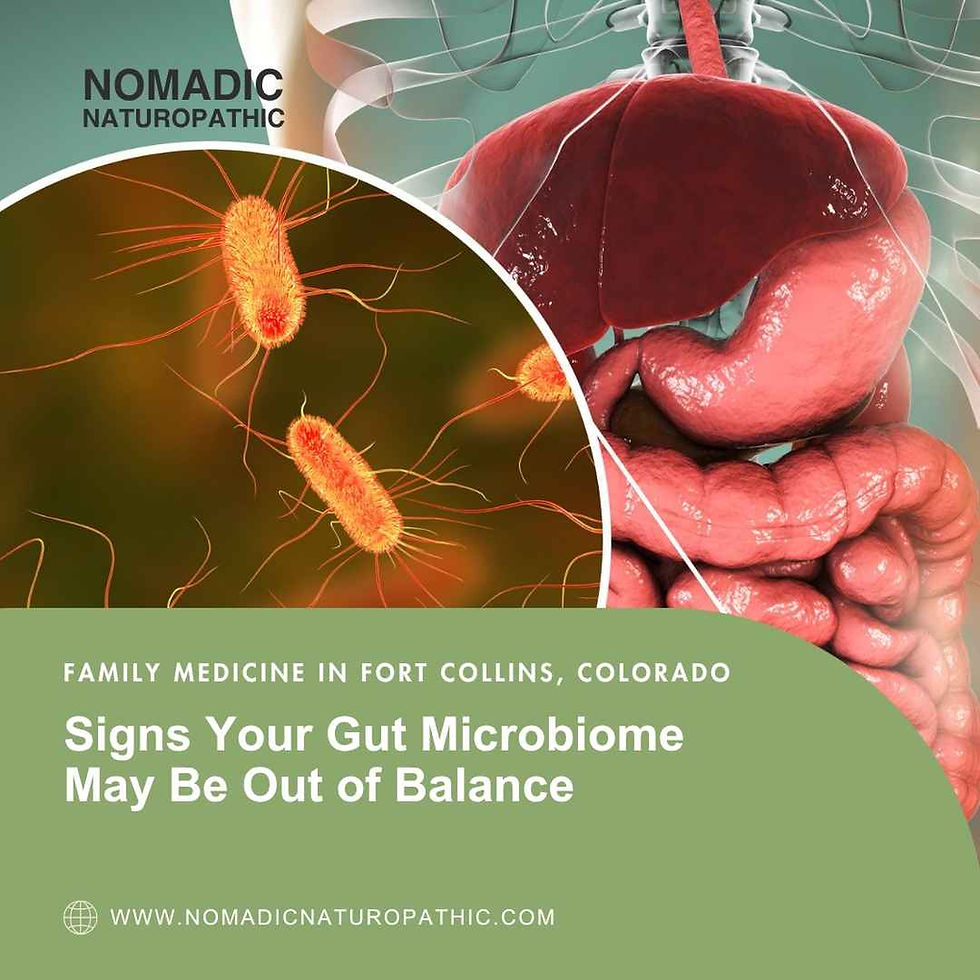
Your digestive system is home to trillions of microorganisms that quietly work behind the scenes every day. They help digest food, support your immune system, produce important nutrients, and even communicate with your brain.
Collectively, these microorganisms are known as the gut microbiome.
When the gut microbiome is healthy and diverse, many people never think about it. But when the balance of bacteria changes, the effects can extend far beyond digestion. Bloating, irregular bowel movements, fatigue, brain fog, and food sensitivities are just a few of the symptoms that may develop when your gut ecosystem is no longer functioning as it should.
At Nomadic Naturopathic, we believe symptoms are signals, not the problem itself. Rather than treating digestive complaints in isolation, we look at the systems influencing your health to understand why those symptoms developed in the first place.
If you're searching for information about the gut microbiome Fort Collins, understanding the role of your gut bacteria is an important step toward improving your digestive health and overall well-being.
What Is the Gut Microbiome?
The gut microbiome is the community of bacteria, fungi, viruses, and other microorganisms that live throughout your digestive tract, primarily within the large intestine.
Although the word "bacteria" often has a negative reputation, many bacteria are essential for good health.
A healthy gut microbiome helps:
Break down certain foods your body cannot digest on its own
Produce vitamins such as vitamin K and some B vitamins
Support immune system function
Help maintain the intestinal lining
Produce short-chain fatty acids that nourish the cells of the colon
Influence communication between the gut and the brain
Rather than existing separately from your body, your gut microbiome functions as an important partner in many aspects of your health.
What Does It Mean When the Gut Microbiome Is Out of Balance?
A healthy microbiome contains a diverse community of microorganisms that work together.
Sometimes, however, this balance changes.
This shift is often referred to as a gut bacteria imbalance or dysbiosis.
Instead of beneficial bacteria thriving, certain microorganisms may become less abundant while others increase beyond healthy levels.
The result is not necessarily an infection. Instead, it is an imbalance within the ecosystem itself.
Like a garden with too many weeds and not enough healthy plants, the digestive environment becomes less resilient and less efficient.
Common Signs Your Gut Microbiome May Be Out of Balance
Because the gut influences many body systems, symptoms are not limited to digestion.
Here are some of the more common signs that your microbiome health may deserve closer attention.
Persistent Bloating
Occasional bloating after a large meal is normal.
Daily bloating, however, is different.
When gut bacteria ferment food in ways they should not, excess gas can develop, leading to abdominal pressure and discomfort.
Persistent bloating is one of the most common reasons people begin investigating their digestive health.
Gas That Doesn't Seem to Improve
Everyone produces intestinal gas.
Excessive gas that occurs after nearly every meal may indicate that certain carbohydrates are being fermented differently because of changes in the gut microbiome.
Rather than blaming individual foods, it is worth asking why your digestive system is responding this way.
Constipation or Diarrhea
Healthy digestion depends on a balanced relationship between the digestive tract and the microorganisms living within it.
A gut bacteria imbalance may contribute to:
Constipation
Diarrhea
Alternating bowel habits
Incomplete bowel movements
While many factors influence bowel function, the microbiome is one important piece of the puzzle.
Food Sensitivities
Some people gradually notice they become sensitive to more and more foods over time.
They eliminate dairy.
Then gluten.
Then certain vegetables.
Eventually, it feels like almost every meal causes symptoms.
Although food sensitivities can have multiple causes, changes in microbiome health may influence how your body responds to different foods.
Understanding why these reactions developed is often more valuable than continually expanding the list of foods you avoid.
Fatigue and Brain Fog
Many people are surprised to learn that digestive health may influence energy and mental clarity.
The gut and brain communicate constantly through what is known as the gut-brain axis.
When digestion is disrupted, some individuals report symptoms such as:
Fatigue
Difficulty concentrating
Brain fog
Reduced mental clarity
These symptoms can have many possible causes, but digestive health is one area worth evaluating when they occur alongside gastrointestinal complaints.
Frequent Digestive Discomfort
Ongoing digestive symptoms such as:
Abdominal pain
Cramping
Feeling overly full after meals
Irregular digestion
May suggest that your digestive system deserves a more comprehensive evaluation.
These symptoms should not simply be dismissed as having a "sensitive stomach".
What Can Disrupt Microbiome Health?
The gut microbiome changes throughout life.
Several factors can influence its composition.
Antibiotic Use
Antibiotics are important medications that can be lifesaving when used appropriately.
However, because they affect bacteria broadly, they may also influence beneficial microorganisms living in the digestive tract.
Most people recover without long-term problems, but some individuals notice changes in digestion following antibiotic treatment.
Diet
The foods you eat influence the types of bacteria that thrive within your digestive system.
A varied, nutrient-rich diet generally supports greater microbial diversity.
Highly processed dietary patterns may have different effects over time.
That said, diet is only one factor. Many people eat well and still experience digestive symptoms because other underlying issues are present.
Chronic Stress
Stress affects more than your mood.
It can influence:
Digestive motility
Stomach acid production
Immune function
Intestinal permeability
Communication between the gut and brain
These changes may also affect the environment in which gut bacteria live.
Illness and Digestive Infections
Some people notice digestive symptoms begin after a stomach virus, food poisoning, or another gastrointestinal illness.
In certain cases, the gut microbiome may take time to recover after these events.
Sleep and Lifestyle
Regular sleep, physical activity, and overall lifestyle habits all contribute to digestive health.
The microbiome does not exist independently from the rest of your body. It responds to many aspects of daily living.
Can You Restore a Healthy Gut Microbiome?
This is one of the most common questions we hear.
The answer depends on why the imbalance developed.
There is no single supplement or probiotic that restores microbiome health for everyone.
Instead, improvement often involves understanding the factors affecting your digestive system.
Depending on your health history and symptoms, recommendations may include:
Clinical nutrition
Dietary adjustments
Herbal medicine
Lifestyle therapies
Stress management strategies
Targeted nutrient support
Appropriate testing when clinically indicated
The goal is to support the environment in which beneficial microorganisms can thrive rather than simply adding more bacteria through supplements.
When Is Further Evaluation Helpful?
Persistent digestive symptoms deserve attention, particularly if you experience:
Daily bloating
Frequent constipation or diarrhea
Ongoing abdominal discomfort
Food sensitivities
Fatigue alongside digestive symptoms
Brain fog
Depending on your individual situation, additional evaluation may include a review of your health history, digestive function, and, when appropriate, laboratory assessments that help provide a more complete understanding of your digestive health.
A Root-Cause Approach to Gut Health
At Nomadic Naturopathic, we don't view the gut microbiome in isolation.
Instead, we ask broader questions.
Why have symptoms developed?
What patterns exist?
Could nutrition, digestion, stress, previous illnesses, or lifestyle factors all be contributing?
By looking at the whole person rather than focusing on a single symptom, we aim to develop personalized recommendations that support long-term digestive wellness.
Looking Beyond Probiotics
If you're searching for answers about the gut microbiome Fort Collins, it's easy to become overwhelmed by advertisements promoting probiotics, cleanses, and quick fixes.
While these products may have a place in some situations, true microbiome health is about much more than taking a daily supplement.
At Nomadic Naturopathic, we don't guess. We investigate.
Our goal is to understand why your digestive system is producing symptoms and identify the underlying factors contributing to a gut bacteria imbalance. Through thoughtful evaluation, personalized care, and evidence-informed natural medicine, we work to help you better understand your body and build a stronger foundation for lasting digestive health.
Your gut microbiome is one of your body's most important ecosystems. Paying attention to the signals it sends can provide valuable insight into your overall health and help guide the path toward sustainable healing.
Frequently Asked Questions
What is the gut microbiome?
The gut microbiome is the collection of bacteria, fungi, viruses, and other microorganisms that live in your digestive tract. These organisms play important roles in digestion, immune function, nutrient production, and communication with the brain.
What causes a gut bacteria imbalance?
Many factors can contribute to a gut bacteria imbalance, including antibiotic use, dietary changes, chronic stress, gastrointestinal infections, sleep habits, and other lifestyle factors. Often, more than one factor is involved.
What are the signs of poor microbiome health?
Common signs include chronic bloating, excessive gas, constipation, diarrhea, food sensitivities, abdominal discomfort, fatigue, and brain fog. These symptoms can also have other causes, so a comprehensive evaluation is important.
Can gut microbiome problems affect more than digestion?
Yes. The gut microbiome influences many systems throughout the body, including the immune system and the gut-brain axis. As a result, imbalances may contribute to symptoms beyond the digestive tract.
How can I improve my gut microbiome naturally?
Supporting microbiome health often involves eating a varied, nutrient-rich diet, managing stress, getting adequate sleep, staying physically active, and addressing any underlying digestive imbalances. The most effective approach depends on your individual health history and the factors contributing to your symptoms.
Disclaimer:
The information provided in this article is for educational purposes only and is not intended as medical advice, diagnosis, or treatment. Always consult a qualified healthcare professional before making changes to your healthcare routine or beginning any new treatment.


Comments