


How Thyroid Health Affects Weight, Energy, and Mood

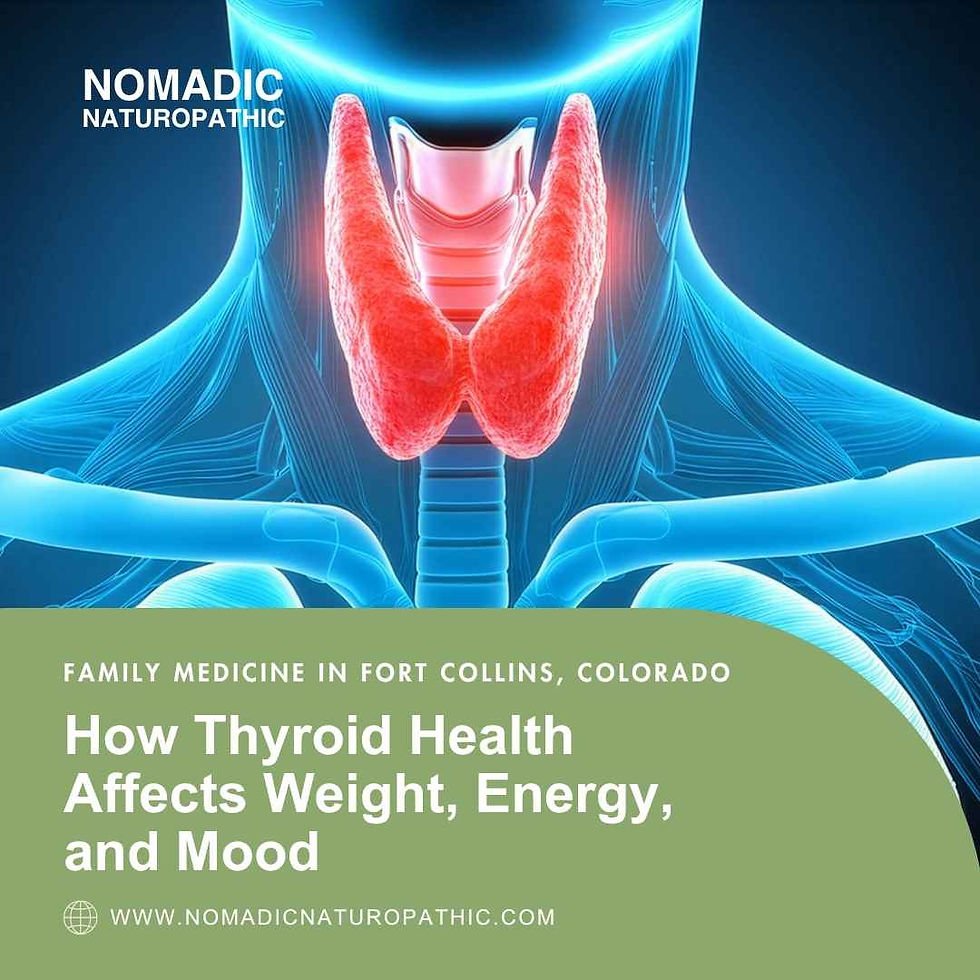
Your thyroid is small, but its influence is enormous.
This butterfly-shaped gland in the front of your neck produces hormones that help regulate how your body uses energy. Thyroid hormones affect metabolism and play a role in the normal function of the brain, heart, muscles, digestive system, and other organs. (NIDDK)
That is why a thyroid hormone imbalance can sometimes feel like it is affecting everything at once.
You may notice that your energy has dropped, your weight is changing, your mood feels different, or your digestion has slowed. Perhaps you are colder than everyone else, struggling to concentrate, or finding it harder to recover from exercise.
These symptoms can point toward thyroid dysfunction, but they are not specific to the thyroid.
At Nomadic Naturopathic, we believe symptoms are signals, not the problem itself. Instead of assuming every case of fatigue or weight gain is thyroid-related, we look at the entire pattern and investigate what may be driving it.
What Does the Thyroid Actually Do?
The thyroid primarily produces thyroxine, or T4, which can be converted in tissues to the more active thyroid hormone triiodothyronine, or T3.
Thyroid activity is regulated by thyroid-stimulating hormone, or TSH, produced by the pituitary gland.
A useful way to think about this system is as a thermostat.
When the body detects that thyroid hormone levels are low, the pituitary generally increases TSH signaling to stimulate the thyroid. When sufficient thyroid hormone is available, TSH normally decreases. (American Thyroid Association)
This feedback system helps maintain appropriate thyroid hormone levels and supports normal metabolic function.
When Thyroid Hormones Are Too Low
Hypothyroidism occurs when the thyroid does not produce enough thyroid hormone to meet the body's needs.
Because thyroid hormones influence energy use throughout the body, insufficient hormone levels can slow many physiological processes.
Common symptoms may include:
Fatigue
Weight gain
Cold sensitivity
Constipation
Dry skin
Thinning hair
Muscle or joint discomfort
Slower heart rate
Depression
Menstrual changes
Symptoms can develop gradually, which means people sometimes adjust to them without realizing something has changed. (NIDDK)
When Thyroid Hormones Are Too High
A thyroid hormone imbalance can also move in the opposite direction.
Hyperthyroidism occurs when the thyroid produces more hormone than the body needs.
Potential symptoms include:
Unintentional weight loss
Rapid or irregular heartbeat
Increased sweating
Heat intolerance
Nervousness or irritability
Difficulty sleeping
Shaky hands
Muscle weakness
More frequent bowel movements
Fatigue
This illustrates an important point.
Both too little and too much thyroid hormone can affect energy, mood, body weight, and overall well-being, but often in very different ways. (NIDDK)
How Thyroid Health Affects Your Energy
Fatigue is one of the most common symptoms associated with hypothyroidism.
When thyroid hormone levels are insufficient, the body's metabolic activity slows.
You may notice that:
Getting out of bed feels harder.
Your normal workout suddenly feels exhausting.
You need more recovery time.
You experience afternoon energy crashes.
You feel mentally and physically slower.
But fatigue alone does not prove there is a thyroid problem.
Sleep disorders, anemia, nutritional deficiencies, chronic stress, medications, infections, depression, and many other medical conditions can produce similar symptoms.
That is why testing and clinical context matter.
Why Thyroid Weight Gain Happens
One of the most common concerns people associate with an underactive thyroid is weight gain.
There is a real connection, but it is often misunderstood.
Thyroid hormones influence metabolic rate. When thyroid hormone levels are significantly low, the body may use fewer calories than usual.
However, thyroid weight gain is usually more modest than many people expect.
The American Thyroid Association notes that in most patients, roughly 5 to 10 pounds of weight gain may be attributable to hypothyroidism, depending on its severity, and much of that increase can be related to salt and water retention rather than body fat alone. (American Thyroid Association)
This distinction matters.
If someone has gained 30 or 40 pounds, it may be tempting to blame the entire change on thyroid function.
But even if hypothyroidism is present, other factors may also be influencing weight.
Weight Is More Complicated Than One Hormone
Body weight reflects the interaction of many systems.
Possible contributors include:
Nutrition
Physical activity
Sleep
Stress
Insulin regulation
Medications
Menopause or other hormonal changes
Muscle mass
Genetics
Overall metabolic health
This means the goal should not be to blame every difficult weight change on the thyroid.
Instead, thyroid function should be evaluated as one potentially important part of a larger metabolic picture.
How Thyroid Health Affects Mood
Thyroid function also affects the brain.
People with hypothyroidism may experience:
Low mood
Depression
Mental slowing
Difficulty concentrating
Forgetfulness
People with hyperthyroidism may experience a different pattern, including:
Nervousness
Irritability
Anxiety-like symptoms
Difficulty sleeping
Both underactive and overactive thyroid function can influence emotional well-being. (NIDDK)
But mood symptoms should never automatically be attributed to thyroid dysfunction.
Depression and anxiety have many potential causes and deserve appropriate evaluation in their own right.
What About Brain Fog?
"Brain fog" is not a formal diagnosis, but patients commonly use the phrase to describe:
Trouble concentrating
Difficulty remembering things
Mental fatigue
Slower thinking
Trouble finding words
These symptoms can occur with hypothyroidism, but they can also occur with poor sleep, stress, nutritional deficiencies, medication effects, hormonal changes, and other health problems.
The American Thyroid Association has specifically noted that patients with treated thyroid disease may still report symptoms such as fatigue, brain fog, low mood, constipation, hair loss, and weight gain even when thyroid function tests are normal. (American Thyroid Association)
This is why symptoms deserve investigation rather than automatic attribution to one hormone.
Thyroid Health and Digestion
Thyroid function can also affect your gastrointestinal system.
When thyroid hormone levels are low, intestinal motility can slow.
This may contribute to constipation.
When thyroid levels are too high, bowel movements may become more frequent. (NIDDK)
If digestive symptoms occur alongside changes in energy, mood, weight, temperature tolerance, or hair and skin, it may be reasonable to consider thyroid function as part of a broader evaluation.
Why Normal Thyroid Labs Matter
Symptoms alone cannot diagnose thyroid disease.
Blood testing remains essential.
TSH is generally the best initial test for evaluating thyroid function. Depending on the clinical situation, free T4 and other thyroid tests may also be appropriate. (American Thyroid Association)
For most otherwise healthy individuals, a normal TSH is reassuring evidence that the thyroid is functioning properly. (American Thyroid Association)
That does not mean persistent symptoms should be dismissed.
It means the investigation may need to move beyond the thyroid.
When Symptoms Look Like a Thyroid Problem but Aren't
This is one of the most important concepts in thyroid health.
Fatigue, weight gain, brain fog, constipation, dry skin, low mood, and feeling cold are often called "thyroid symptoms."
But they are not exclusive to thyroid disease.
NIDDK specifically notes that symptoms such as fatigue and weight gain are common and do not necessarily mean someone has a thyroid problem. (NIDDK)
If thyroid testing is normal, other factors worth considering may include:
Sleep quality
Iron or vitamin deficiencies
Digestive health
Stress
Blood sugar regulation
Reproductive hormone changes
Medications
Chronic illness
Other medical conditions
Normal thyroid testing can therefore be useful because it helps narrow the investigation.
What About Hashimoto's Disease?
Hashimoto's disease is an autoimmune condition in which the immune system attacks the thyroid.
Over time, it can lead to hypothyroidism.
Common symptoms, when hypothyroidism develops, can include fatigue, weight gain, constipation, cold intolerance, dry skin, thinning hair, and menstrual changes. (NIDDK)
Thyroid antibody testing may be appropriate when autoimmune thyroid disease is suspected.
However, antibody status and thyroid hormone function are not the same thing.
Someone's thyroid function still needs to be assessed using appropriate laboratory testing and clinical evaluation.
A Whole-Person Approach to Thyroid Hormone Imbalance
At Nomadic Naturopathic, we don't assume that every patient with fatigue or weight changes has thyroid dysfunction.
We investigate the pattern.
That may include looking at:
Your thyroid history
Current symptoms
Nutrition
Sleep
Stress
Digestive health
Blood sugar regulation
Menstrual or reproductive hormone patterns
Physical activity
Appropriate laboratory testing
Depending on the individual, Dr. Danny Dowling may use clinical nutrition, herbal medicine, lifestyle therapies, exercise guidance, and targeted nutrient support to address modifiable factors influencing overall health.
For diagnosed thyroid disease requiring prescription medication, medication management should remain with the appropriate prescribing clinician. Dr. Dowling is a Registered Naturopathic Doctor in Colorado and does not prescribe pharmaceutical drugs.
Why More Thyroid Hormone Is Not Always the Answer
When someone feels tired or struggles with weight despite normal thyroid labs, it can be tempting to assume they simply need more thyroid hormone.
That conclusion can be misleading.
The American Thyroid Association notes that once hypothyroidism has been appropriately treated and thyroid hormone levels are normal, the ability to gain or lose weight is generally similar to that of people without thyroid problems. (American Thyroid Association)
Persistent symptoms after thyroid levels normalize therefore deserve a broader investigation rather than automatically assuming inadequate thyroid treatment.
When Should Thyroid Symptoms Be Evaluated?
Consider discussing thyroid testing with an appropriate healthcare professional if you experience persistent:
Fatigue
Unexplained weight changes
Cold or heat intolerance
Constipation or frequent bowel movements
Hair or skin changes
Mood changes
Heart rate changes
Menstrual changes
Muscle weakness
Brain fog
No single symptom confirms a thyroid disorder.
The pattern, medical history, physical examination, and laboratory findings all matter.
Your Thyroid Is Important, but It Is Not the Whole Story
If you are experiencing a possible thyroid hormone imbalance, it can be easy to view every symptom through the lens of thyroid health.
Sometimes that connection is real.
Low thyroid hormone can affect energy, metabolism, mood, digestion, and body weight. Excess thyroid hormone can also cause significant changes in energy, mood, heart rate, and weight. (NIDDK)
But symptoms such as fatigue, brain fog, mood changes, and thyroid weight gain can also have other causes.
At Nomadic Naturopathic, we don't guess. We investigate.
We look at thyroid function alongside nutrition, digestion, sleep, stress, metabolism, and other hormonal systems to understand the bigger picture.
The goal is not simply to put a thyroid label on your symptoms.
It is to understand what is actually driving them.
If you have been dealing with unexplained changes in your energy, weight, or mood and still do not have clear answers, a free 15-minute assessment can help determine whether Nomadic Naturopathic is a good fit for a deeper investigation.
Frequently Asked Questions
Can thyroid hormone imbalance cause weight gain?
Yes. Hypothyroidism can contribute to weight gain because reduced thyroid hormone levels can slow metabolic activity. However, thyroid-related weight gain is often modest, and some of the increase may come from salt and water retention. (American Thyroid Association)
How does the thyroid affect energy?
Thyroid hormones help regulate how the body uses energy. When thyroid hormone levels are too low, many physiological processes slow down, which can contribute to fatigue and reduced energy. (NIDDK)
Can thyroid problems affect mood?
Yes. Hypothyroidism can be associated with depression or low mood, while hyperthyroidism can contribute to nervousness, irritability, and sleep problems. Mood changes can also have many non-thyroid causes. (NIDDK)
How much weight gain can hypothyroidism cause?
The amount varies, but the American Thyroid Association states that approximately 5 to 10 pounds may be attributable to hypothyroidism for many patients, depending on severity. Other factors should be investigated when weight gain is substantially greater. (American Thyroid Association)
What tests evaluate thyroid function?
TSH is generally the first blood test used to assess thyroid function. Free T4 is commonly used alongside TSH when more information is needed. Additional testing depends on the clinical situation. (American Thyroid Association)
What if I have thyroid symptoms but normal thyroid tests?
Symptoms such as fatigue, weight changes, constipation, brain fog, and mood changes can have many causes. If thyroid testing is normal, a broader evaluation may help identify contributors such as sleep problems, nutrient deficiencies, digestive health, stress, medications, metabolic factors, or other medical conditions.
Medical Disclaimer
The information provided in this article is for educational purposes only and is not intended as medical advice, diagnosis, or treatment. Always consult a qualified healthcare professional before making changes to your healthcare routine or beginning any new treatment.


Comments