


Brain Fog After Eating: Why Thinking May Feel Harder After Meals

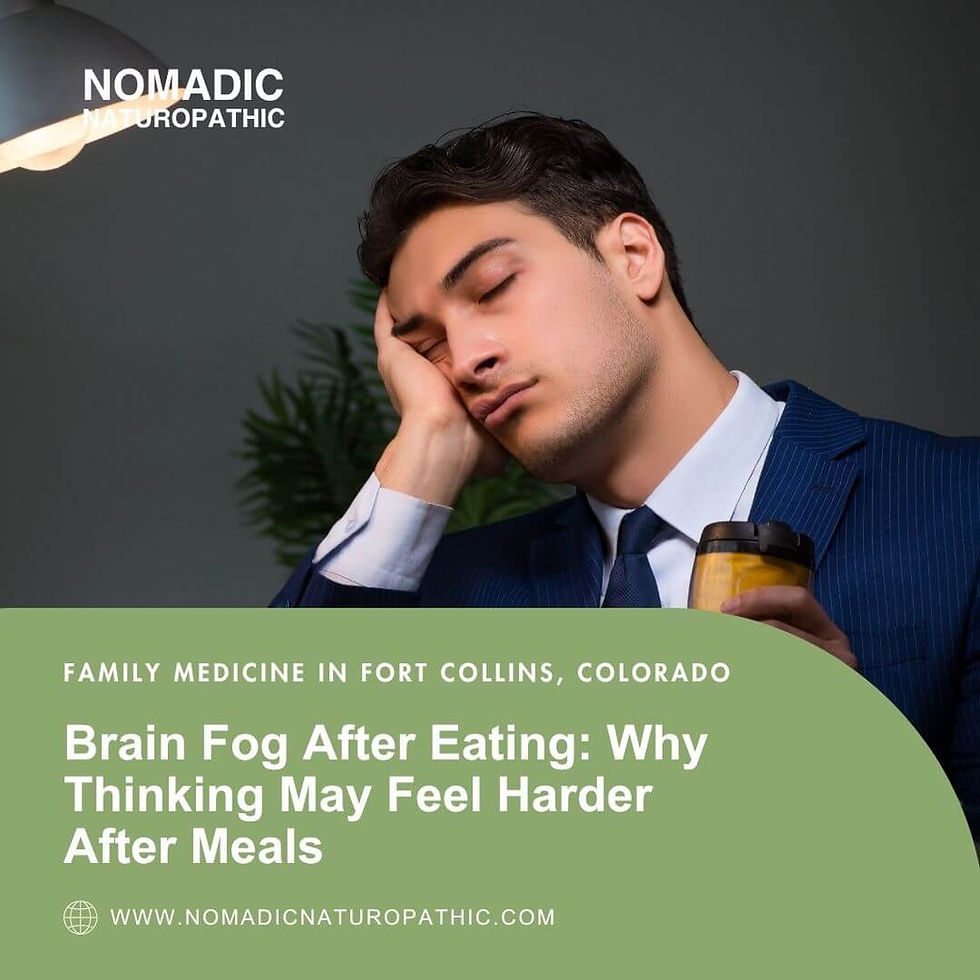
It is a strangely specific pattern, and once you notice it, you cannot unsee it: you are reasonably sharp all morning, you eat lunch, and within an hour your brain files for the rest of the afternoon off. Reading takes three passes. Meetings blur. The couch, or the third coffee, starts calling. If your mental clarity reliably collapses after meals, that timing is not a coincidence; it is a clue. This article answers one question from our brain fog series: why may brain fog show up after eating? For the broader map of fog's contributors, see our root-cause guide to brain fog.
Is It Normal to Feel Foggy After a Meal?
A mild dip after eating is real physiology. Digestion redirects blood flow and nervous system attention toward the gut, and there is a natural circadian lull in alertness in the early afternoon that stacks on top of lunch for most people. Researchers call the sleepy version postprandial somnolence, the well-known food coma. The dividing line is degree and consistency. A gentle ebb for twenty minutes after a large meal is ordinary. Fog that is heavy, lasts an hour or more, follows most meals, or forces you to restructure your day around it may be a sign that something more specific is going on, and it is worth investigating rather than accepting.
Blood Sugar Swings: The Most Common Culprit
The most frequent driver of post-meal fog is the shape of your blood sugar curve. A meal built on refined carbohydrates, think a sandwich on white bread with chips and a sweetened drink, can push glucose up steeply. The body answers with a surge of insulin, and in many people the resulting descent overshoots, producing a dip an hour or two later. The brain, which runs almost entirely on glucose, experiences that dip as sleepiness, cloudiness, irritability, and cravings for the next round of carbohydrates. Some people experience an exaggerated version of this pattern, sometimes called reactive hypoglycemia, with shakiness, sweating, or anxiety alongside the fog.
Insulin resistance can make the whole cycle more pronounced. When cells respond sluggishly to insulin, the body compensates with more of it, and the swings steepen. This pattern is common, frequently silent for years, and may be associated with fog that is worst after carbohydrate-heavy meals, energy that rollercoasters through the day, and an expanding waistline despite unchanged habits. A fasting glucose that looks fine does not exclude it, which is why post-meal patterns are genuinely useful diagnostic information.
Meal Composition, Size, and Timing
How you eat shapes the curve as much as what you eat. Very large meals demand more digestive effort and produce longer dips. Meals lacking protein, fiber, and fat digest fast and spike hard; the same carbohydrates eaten alongside protein and vegetables produce a visibly gentler curve. Skipping breakfast and arriving at lunch ravenous sets up both overeating and a steeper spike. Alcohol with a midday meal compounds the effect for many people. None of this requires a diagnosis to be worth experimenting with, and the experiments themselves, such as noticing whether a protein-forward lunch changes your afternoon, generate useful information for any later evaluation.
Food Reactions
For a subset of people, post-meal fog is less about sugar mechanics and more about how their immune system or biochemistry responds to particular foods. Celiac disease is the clearest example: brain fog is a well-documented symptom, and it can occur even when digestive symptoms are mild. Non-celiac gluten sensitivity is described by many patients, though it remains an area of active research. Histamine intolerance is another candidate, in which aged, fermented, or leftover foods may be associated with flushing, headaches, congestion, and cloudy thinking. And broader food sensitivities may play a role for some people, a topic with more nuance than internet testing kits suggest; our article on food sensitivities, allergies, and intolerances sorts out the terminology. When fog consistently follows specific foods rather than meals in general, that pattern deserves attention.
Other Possible Contributing Factors
A few additional threads may weave in. The gut-brain axis means that a digestive system under strain can influence cognition directly, something we explore in our article on the gut-brain connection. Dehydration blunts concentration and is remarkably easy to achieve in Colorado's dry air, especially when the day's fluids are mostly coffee. Nutrient status also shapes how resilient your brain is to any dip at all; low iron or B12 lowers the floor, which is why nutrient deficiencies belong in the same conversation. Finally, sitting motionless after eating lets glucose pool; even a ten-minute walk after meals measurably flattens the curve for many people.
What You Can Try in the Meantime
While you sort out whether an evaluation is needed, a few low-risk experiments are worth running. Rebuild lunch around protein and vegetables for a week and watch what your afternoon does. Take a ten-minute walk after your largest meal. Swap the post-lunch coffee for a glass of water first, since dehydration and the afternoon dip feel remarkably similar. Keep portions moderate rather than saving all your hunger for one giant meal. None of these are treatments for an underlying condition, but each one flattens the ordinary physiology of the post-meal dip, and how much they help is itself diagnostic information worth bringing to an appointment.
Symptoms and Patterns Worth Tracking
Before any appointment, two weeks of simple notes can be worth more than any single lab test. Record what you ate, when the fog arrived, how long it lasted, and what else came with it, such as sleepiness, shakiness, irritability, bloating, headache, or congestion. Fog that follows carbohydrate-heavy meals but not protein-forward ones points one direction; fog that follows specific foods regardless of composition points another; fog after every meal, with digestive symptoms, points somewhere else again. This is exactly the kind of pattern evidence that makes an evaluation efficient.
When to Seek Evaluation
Consider an evaluation if post-meal fog is a regular feature of your week, if it comes with shakiness, sweating, or heart pounding that suggests exaggerated blood sugar dips, if it travels with digestive symptoms, unexplained weight change, or fatigue, or if it is affecting your work, driving, or safety. Testing may include fasting glucose, hemoglobin A1c, fasting insulin, celiac screening where the history fits, iron and B12 status, and thyroid function, with the exact list following from your story rather than a template.
How Functional and Naturopathic Medicine May Help
Post-meal fog sits squarely in the territory where food, metabolism, gut function, and stress physiology overlap, which is precisely where a functional and naturopathic approach is comfortable working. An evaluation at our Fort Collins clinic takes the time to reconstruct your actual eating patterns, runs targeted testing rather than guesswork, and builds a plan around your real life, whether that means rebalancing meal composition, addressing blood sugar regulation, investigating specific food reactions properly instead of by elimination roulette, or supporting gut health underneath it all. We coordinate with conventional providers when the picture calls for it. If you are curious how that process works, our what to expect page describes a first visit, and the Nomadic Naturopathic homepage has more about the practice and Northern Colorado availability.
When to Seek Prompt Medical Care
Two situations deserve urgency rather than scheduling. First, severe hypoglycemia symptoms, such as confusion, slurred speech, extreme shakiness, sweating, fainting, or seizures, need immediate medical attention, particularly in anyone taking blood sugar medications. Second, any sign of a true allergic reaction after eating, including swelling of the lips or throat, hives, wheezing, or difficulty breathing, is an emergency. Sudden confusion, one-sided weakness, or trouble speaking at any time, meal or no meal, also calls for emergency care.
Frequently Asked Questions
Why is my brain fog worst after lunch specifically?
Lunch sits on top of the body's natural early-afternoon dip in alertness, so any blood sugar swing lands on already-lowered defenses. Lunch is also the meal most often built for convenience, which tends to mean refined carbohydrates eaten quickly at a desk. The combination of circadian timing and meal composition makes early afternoon the most common window for post-meal fog.
Does brain fog after eating mean I have diabetes?
Not necessarily. Post-meal fog is far more often associated with ordinary blood sugar swings or meal composition than with diabetes. That said, pronounced or worsening patterns can accompany insulin resistance and prediabetes, which are common and frequently silent, so persistent post-meal symptoms are a reasonable prompt to have glucose regulation properly evaluated rather than assumed in either direction.
What should I eat to avoid brain fog after meals?
As a general pattern, meals anchored by protein, fiber, and healthy fats produce gentler glucose curves than refined-carbohydrate meals, and moderate portions produce gentler curves than large ones. A short walk after eating helps many people. If fog seems tied to specific foods rather than meal composition, targeted evaluation makes more sense than broad restriction.
Where can I get post-meal brain fog evaluated in Fort Collins?
Nomadic Naturopathic evaluates post-meal fog and related blood sugar, digestive, and nutrient questions at our Fort Collins, Colorado clinic, beginning with a free 15-minute consultation to see whether the approach fits your situation.
Medical Disclaimer
The information provided in this article is for educational purposes only and is not intended as medical advice, diagnosis, or treatment. Always consult a qualified healthcare professional before making changes to your healthcare routine or beginning any new treatment.


Comments